

Exotic Case Studies from Wilhelma: Okapi, Lion, and More
The partnership between EXAMION and Wilhelma Stuttgart has been thriving since 2016 and is defined by close, practice-oriented collaboration. Since then, Wilhelma’s veterinary department has regularly relied on EXAMION’s advanced X-ray technology.
In return, Wilhelma provides EXAMION with fascinating case studies from its daily veterinary work, which we are pleased to share with you in our new series, “Exotic Case Studies from Wilhelma: Okapis, Lions, and More.”
Case 1: Mara
Among the many animal species at Wilhelma Stuttgart are maras, large rodents belonging to the guinea pig family. Owing to their distinctive appearance, they are often referred to as “pampas hares.” Native to South America, maras differ from other guinea pig species primarily in their long legs and large ears, which give them their characteristic hare-like appearance.
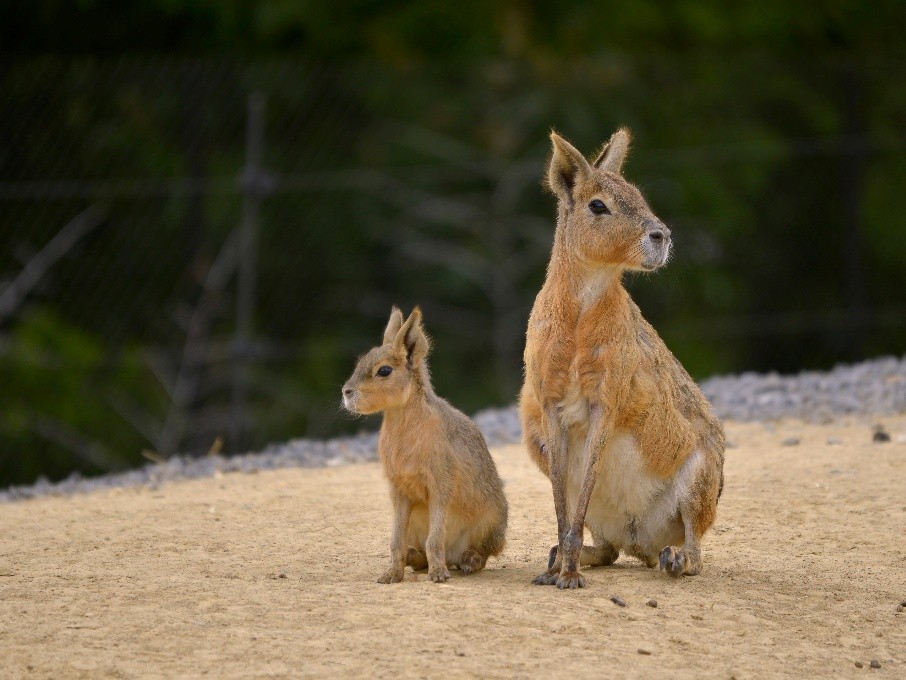
The oldest mara at Wilhelma is more than 15 years old. After the animal showed reduced mobility and a pronounced hunched posture, it underwent a veterinary examination. Initial blood tests revealed no abnormalities, so an X-ray examination was performed under light sedation. The radiographs revealed an exostosis in the region of the lumbar vertebrae L6/L7 and at the lumbosacral junction (see Figure 2).
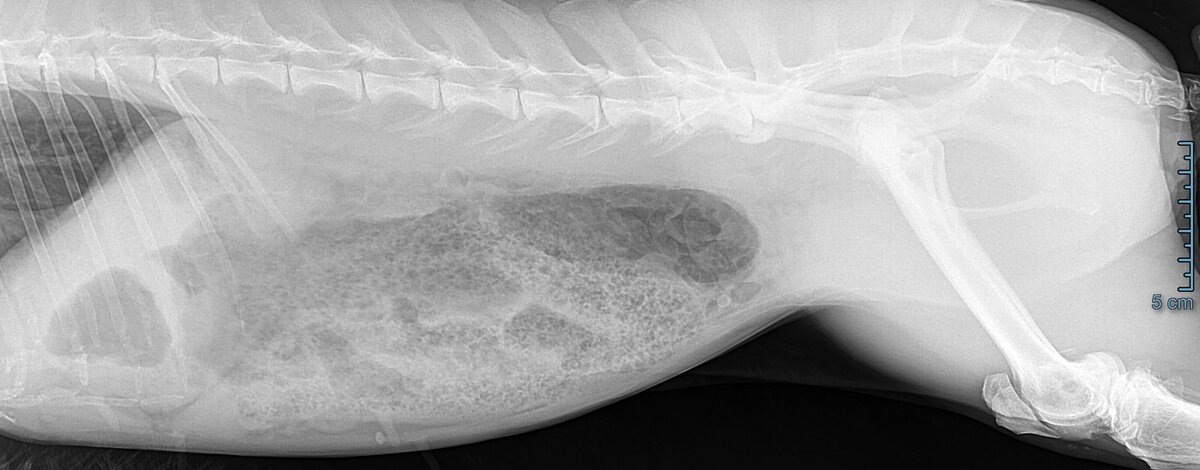
As therapeutic options for wild animals such as maras are limited, the patient is currently being closely monitored. Particular attention is being paid to signs of pain in order to detect any improvement or deterioration at an early stage. Any further treatment decisions will be based on these observations.
Case 2: Okapi
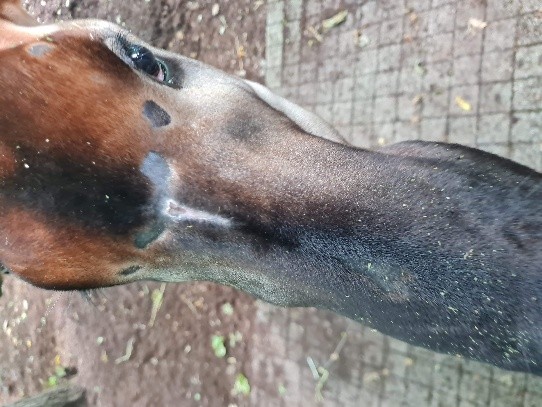
Tano is a curious young male okapi born at Wilhelma. In the wild, okapis—often referred to as forest giraffes—inhabit the rainforests of Central Africa and are considered endangered, with an estimated population of only 10,000 to 35,000 individuals. Like many young animals, Tano explores his surroundings with great curiosity and rarely misses an opportunity to investigate anything that catches his attention.
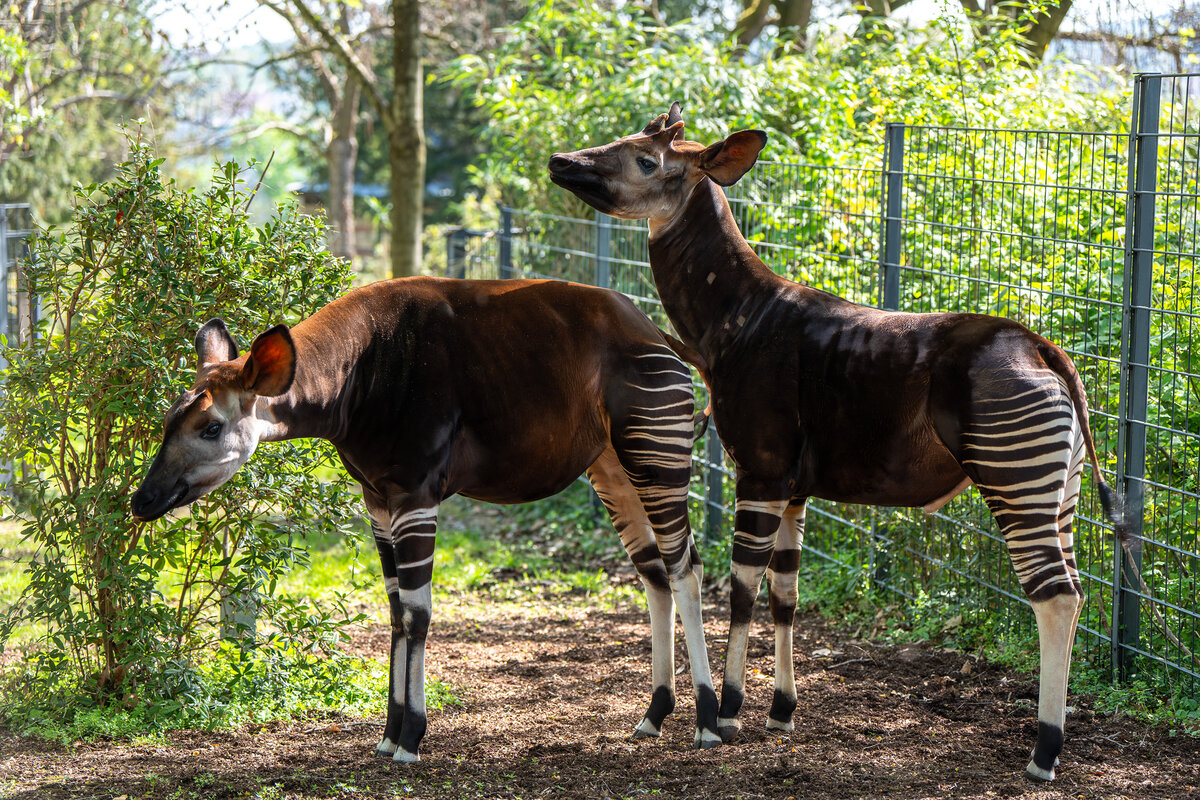
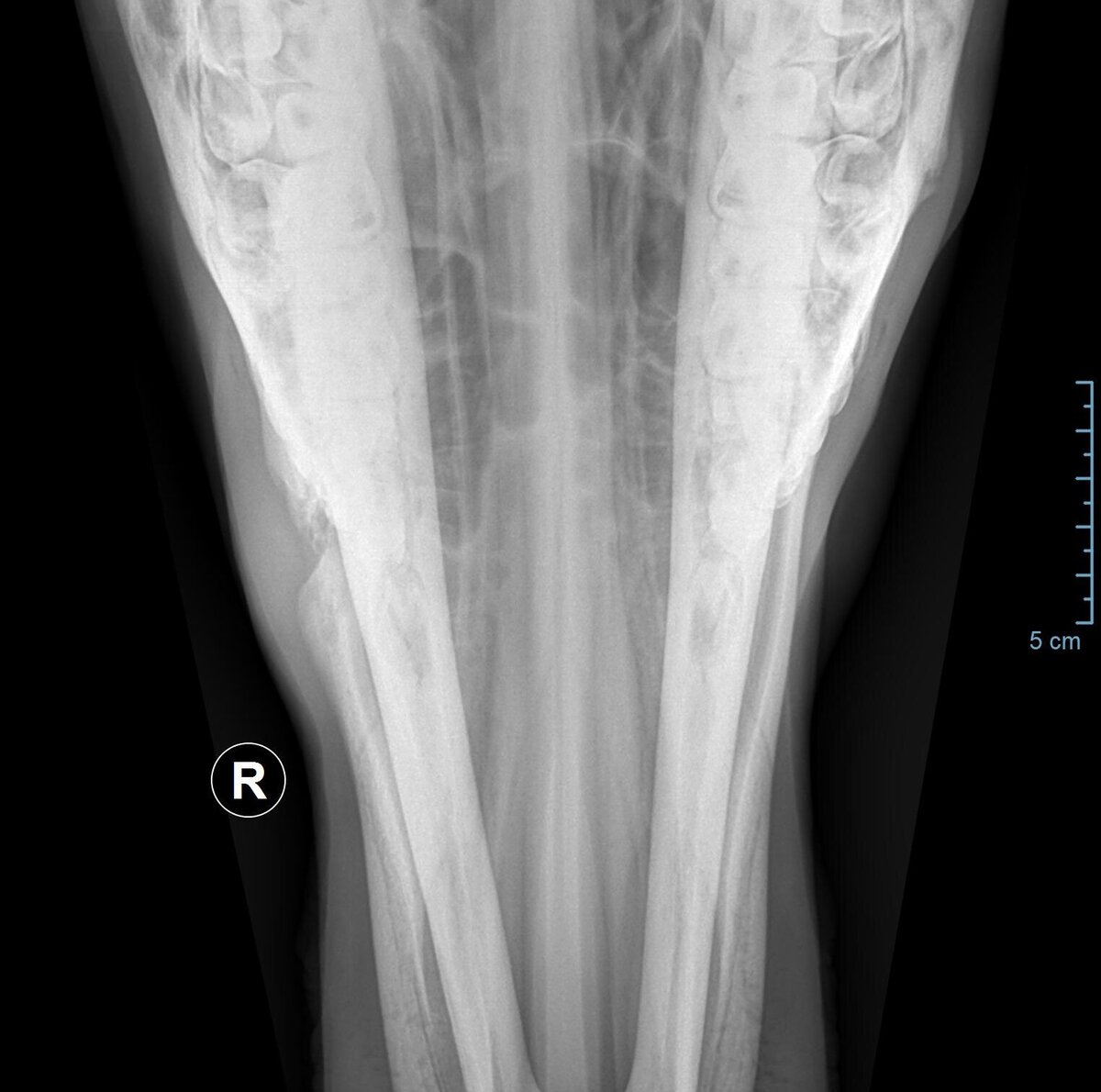
During one of his recent explorations, Tano injured himself on a fence. In addition to a superficial abrasion on his nose, he developed significant swelling on the right side of his face. To determine the cause of the swelling, a radiographic examination was performed in collaboration with the Veterinary Centre for Horses in Kirchheim.
The X-rays revealed a fracture of the nasal bone, thereby ruling out an infectious process as the underlying cause of the swelling (see Figure 2).
Fortunately, the swelling subsided significantly within a short period of time, and the injuries healed completely. Tano has since made a full recovery and is doing very well. As part of an international breeding and conservation programme, he now lives at Antwerp Zoo in Belgium.
Case 3: Forest Tortoise
For the forest tortoises at Wilhelma, the egg-laying season typically begins when the females exhibit increased digging behaviour. As these tortoises prefer to lay their eggs exclusively in the indoor enclosure, it is important to ensure that egg-laying has been completed before the animals are transferred to the outdoor enclosure.
A European pond turtle was suspected of suffering from egg retention. An X-ray examination confirmed this suspicion: several eggs that had not yet been laid were clearly visible (see Figures 2 and 3). To assist the animal, it was given calcium and sugar to provide the energy and muscle strength required for natural egg-laying. Timely treatment is particularly important in cases of egg binding. If the eggs remain in the oviduct for a prolonged period, calcium continues to accumulate in the eggshells. This causes the shells to become increasingly hard and rough. This can irritate or even injure the mucous membranes, preventing the eggs from passing through the oviduct.
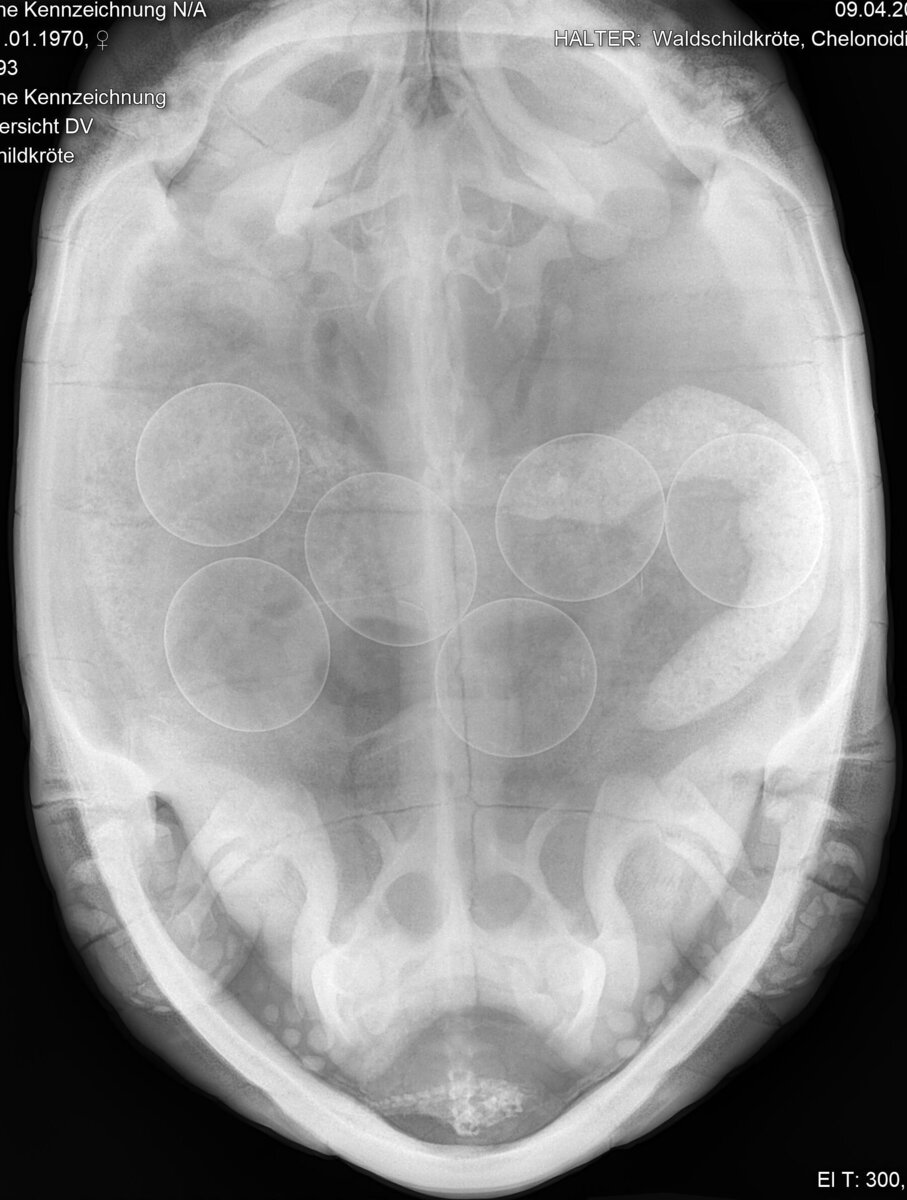

The consequences can be severe, causing significant stress for the animal and increasing the risk of complications. In the worst case, the resulting micro-lesions may lead to sepsis. In this instance, however, the egg retention was detected at an early stage. The treatment proved successful, as no eggs were visible on the follow-up radiographs. The tortoise was subsequently able to join the other animals in the outdoor enclosure.
Case 4: Asian Lion
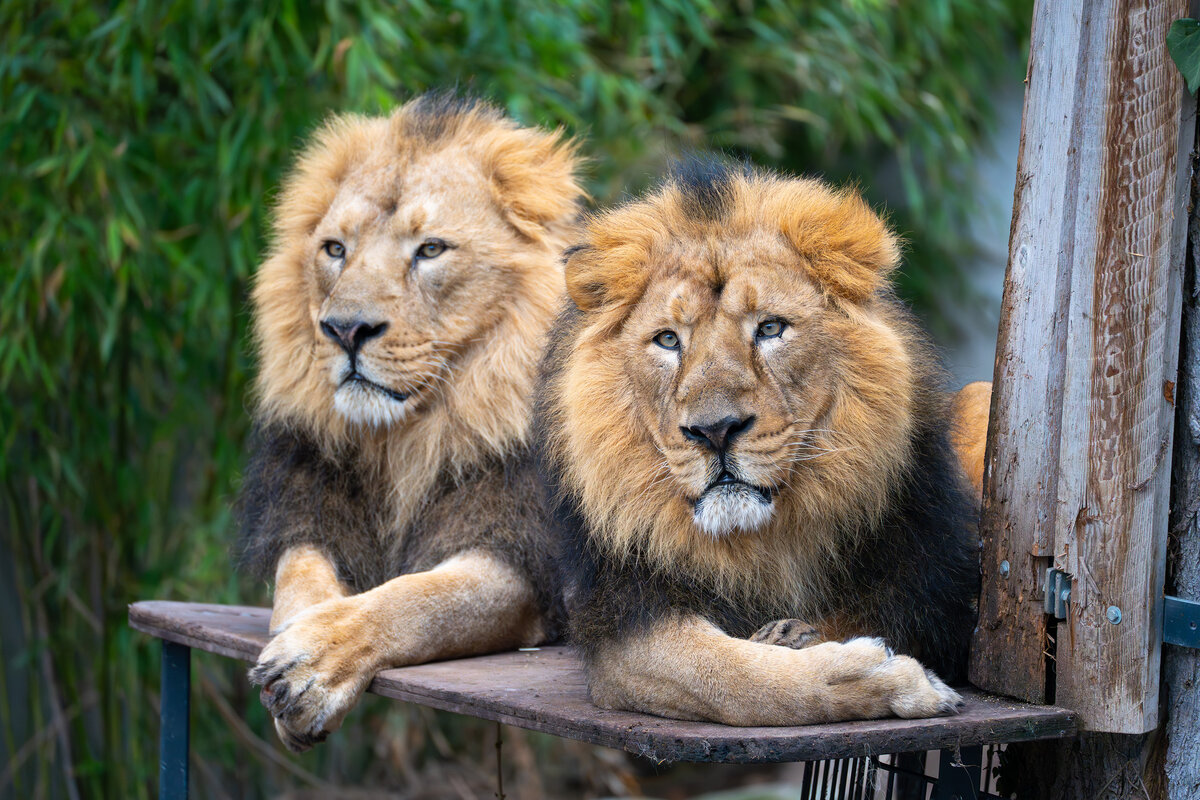
Kajal, an Asian lion, arrived at Wilhelma Stuttgart from Mulhouse, France, some time ago. Shortly after his arrival, the keepers noticed an injury to one of his paws. The affected area appeared to have been intensively licked by the lion, resulting in a clearly visible wound (see Figure 2).
To rule out a malignant process with possible involvement of the underlying bone, radiographs of the left forepaw were obtained. The examination produced reassuring results: no abnormalities were detected in the region of the affected middle digit. Both the distal phalanx (claw bone) and the middle phalanx appeared clearly defined and showed no evidence of pathological changes or damage (see Figure 3).
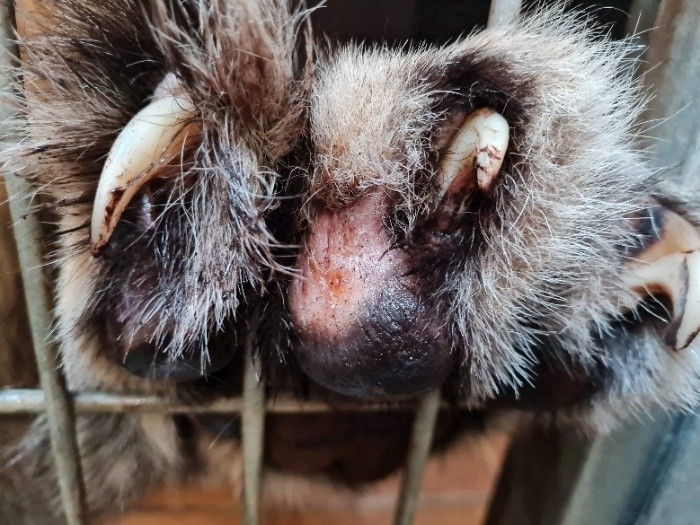
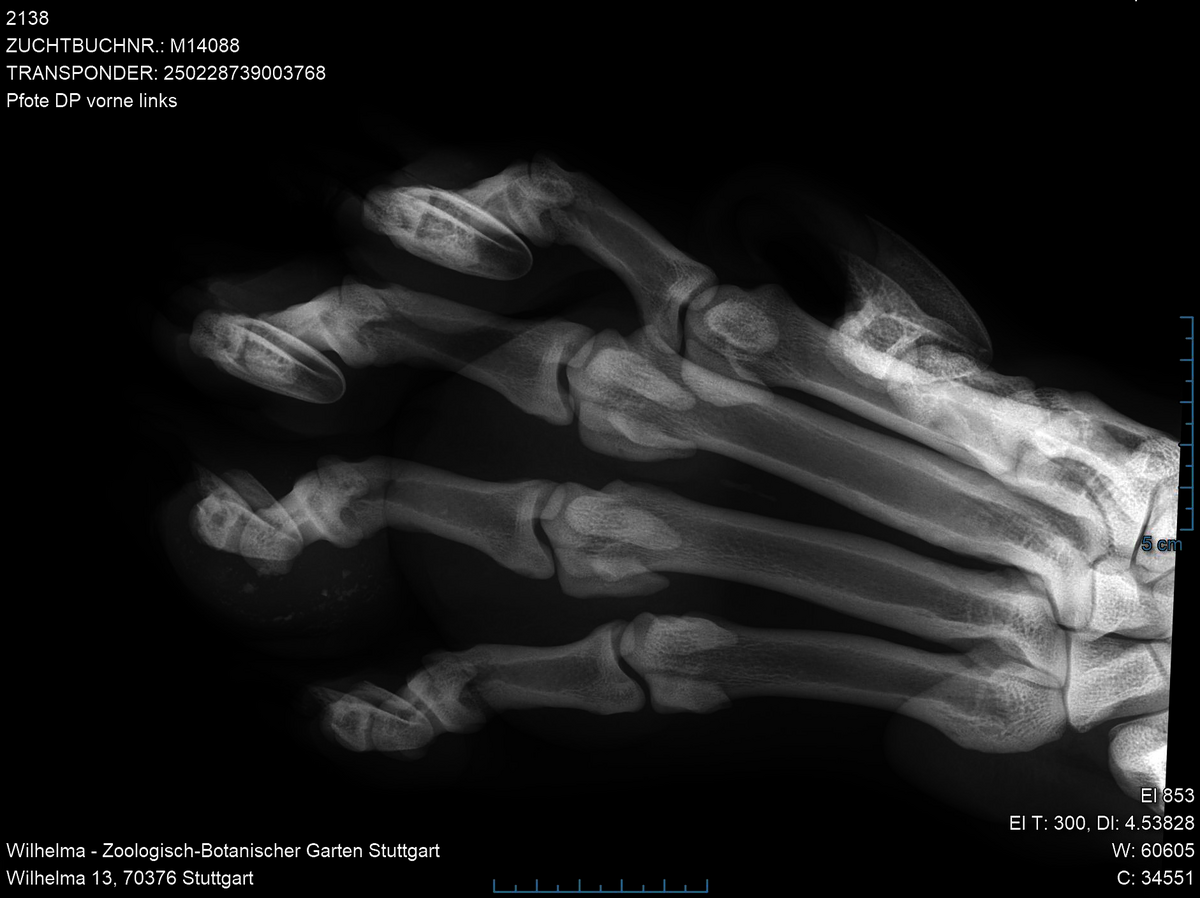
The wound has healed completely, and Kajal has made a full recovery with no lasting limitations.
Would you like to discover more fascinating cases? Explore our other article about elephants, wombats and more.
