Does your medical care center or practice network already have facilities to perform X-ray examinations? But is the existing equipment already quite outdated? Simply update your existing X-ray system with the DR upgrade solutions from EXAMION. In this way, you can extend the service life of your X-ray equipment and at the same time benefit from advanced digital X-ray technology.
For you, this means an improvement of the quality of every single X-ray image. By this, the foundation on which your diagnosis is based will be improved, ensuring more effectivity and reliability for your patients.
Digital X-ray acquisition with EXAMION detectors together with customised X-AQS X-ray software will also save you time. The X-ray software, configured according to your needs, can be fully integrated into the IT system of the medical care centre. You benefit from seamless integration with your practice management system, even if different operators are working at different locations. This makes routine tasks easier for operators and saves time when searching for patient data and the associated X-ray images.
DR upgrade solutions also offer low maintenance costs, so that in many cases the modernisation of your existing X-ray system could pay for itself very quickly. Please contact us for more information about services available for your group practice network (link to Service).
- Fast and simple retrofitting for existing X-ray systems
- Take advantage of the benefits of digital X-ray systems in your medical care centre
- Uniform software across the practice network
- Reduced maintenance costs
Digital detector systems for retrofitting X-ray systems
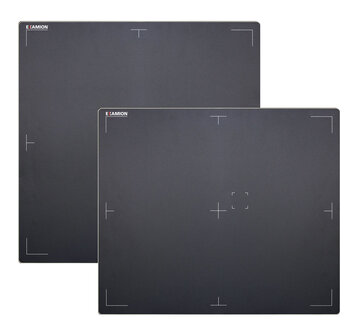
X-DR L und XL WiFi
- Superior value for money
- Standardised X-ray equipment
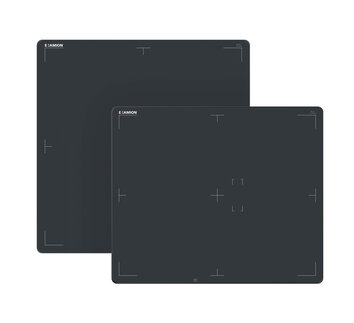
X-DR L und XL WiFi Premium
- Outstanding quality of X-ray images
- State of the art technology
Häufige Fragen zur Modernisierung bestehender Röntgenanlagen
A DR upgrade can be a cost-effective option for a medical care center (MVZ) when the existing X-ray system is technically reliable and key components can continue to be used. Instead of replacing the entire X-ray system, for example, an existing DR detector can be replaced with modern detector technology, or an existing CR system can be upgraded to DR technology.
Which solution is more cost-effective in the long term depends on the individual starting point, examination volume, and the specific requirements of the MVZ. In addition to the initial investment, factors such as maintenance and service, downtime risks, workflow efficiency, image quality, IT and PACS integration, and future expansion options should also be taken into consideration.
Especially for MVZs with established infrastructure, a targeted DR upgrade can provide an effective way to modernize existing X-ray systems step by step and optimize the digital radiography workflow — without having to replace the entire infrastructure.
Replacing an X-ray detector can be a sensible option for an MVZ when the existing detector technology no longer fully meets current requirements for image quality, workflow efficiency, durability, or ease of use. Even when the X-ray system itself remains reliable, a modern detector can provide a targeted technology upgrade without the need to replace the entire system.
When selecting a new DR detector, factors such as detector size and active imaging area, DQE, spatial resolution, weight and ergonomics, wireless workflow, battery concept, image transmission, and compatibility with the existing X-ray system and IT infrastructure should be taken into consideration.
For an MVZ, it is also important that the detector is suited to the examination range, patient volume, and workflow of the respective X-ray room, and that it can be efficiently integrated into existing DICOM and PACS structures.
X-ray software is a central component of a modern digital radiography workflow. It connects image acquisition with the processing and distribution of X-ray images and can help standardize and streamline workflows across an MVZ.
As part of a modernization project, it is therefore important to assess how well the X-ray software integrates with RIS, DICOM Modality Worklist, PACS, and other IT systems. A suitable software solution can support the transfer of patient and examination data, image acquisition and processing, as well as the structured distribution and availability of images.
For MVZs with multiple examination rooms or locations, it is also essential that the software can be flexibly integrated into the existing IT infrastructure and expanded to meet future requirements. This means that modernization can improve not only the detector technology, but the entire digital radiography workflow.
Before deciding between a DR upgrade and purchasing a new X-ray system, an MVZ should conduct a comprehensive assessment of its existing equipment. This should include the technical and mechanical condition of the X-ray system, current image quality, the radiography workflow, and the existing IT infrastructure, including DICOM and PACS integration.
Other important factors include examination volume, use across multiple workstations, service and spare parts availability, and future requirements. It is essential to determine which examinations will need to be performed in the future and which components — such as the DR detector or X-ray software — actually need to be upgraded to meet those requirements.
A structured assessment of the existing system provides the basis for determining the most appropriate modernization solution for the MVZ from both a technical and economic perspective.